There was a time when most people had a fairly direct relationship with their food’s origins — grown nearby, prepared simply, understood intuitively. Modern food systems have grown considerably more complex, often involving long, opaque supply chains that stretch across continents before food ever reaches a plate. In response, a growing number of consumers are asking more pointed questions about where their food actually comes from, how it’s produced, and what impact those choices have — both on personal health and on the wider world.
This renewed interest in food provenance reflects a broader cultural shift towards wanting greater transparency and connection in an increasingly complex, industrialised food system. Below, we explore four areas central to this shift: the growing appeal of local and seasonal sourcing, the push for genuine transparency in food production, changing dynamics within the hospitality industry, and the role technology increasingly plays in how food moves from farm to table.
The Appeal of Local and Seasonal Sourcing
Interest in locally sourced, seasonal food has grown considerably in recent years, driven by a combination of environmental concerns, genuine interest in flavour and quality, and a desire to support local farmers and producers rather than relying entirely on globalised, industrial food supply chains that can feel genuinely disconnected from any specific place or season.
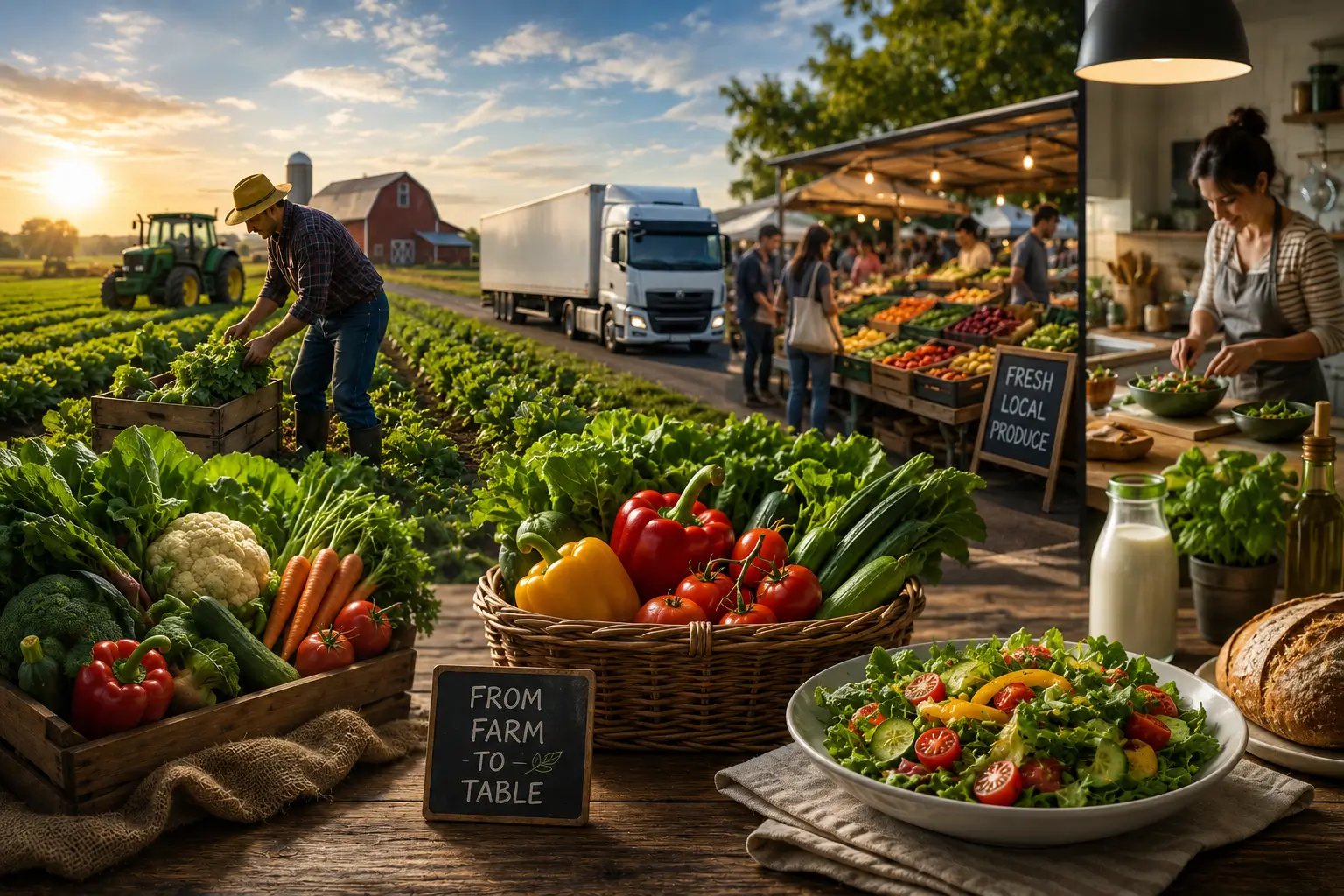
Farmers’ markets and direct-to-consumer sales models have seen renewed popularity as a result, offering consumers a more direct connection to food producers and, often, genuinely fresher products than what’s typically available through longer conventional supply chains. This shift has also proven meaningfully beneficial for smaller-scale producers, who’ve historically struggled to compete with larger agricultural operations within traditional retail distribution models, but who can often thrive within these more direct sales relationships that value quality and story over pure volume and price.
Seasonal eating, too, has experienced something of a revival, partly driven by chefs and food writers championing the genuine flavour benefits of eating produce at its peak, and partly reflecting growing environmental awareness around the resource intensity of importing out-of-season produce over significant distances. This doesn’t necessarily mean strict adherence to seasonal eating for everyone, but rather a growing awareness and appreciation that’s gradually reshaping how many people think about and plan their food choices throughout the year.
Transparency in Food Production
As supply chains have grown more complex, consumer demand for genuine transparency around food production has grown correspondingly, extending well beyond simple curiosity into genuine purchasing decisions increasingly shaped by how, and by whom, food is actually produced.
Certification schemes — covering everything from organic production to fair trade practices to specific animal welfare standards — have proliferated considerably as a result, offering consumers some means of understanding production practices without needing to investigate every individual supply chain personally. That said, the sheer number and variety of certifications can itself create genuine confusion, and discerning consumers increasingly need to understand what different labels genuinely mean and verify, rather than assuming all sustainability or welfare claims carry equal weight or rigour.
Traceability technology has also played an increasingly important role in this shift, with some producers and retailers now offering consumers the ability to trace specific products back to their exact origin, sometimes down to the individual farm or producer involved. This level of transparency, while still relatively niche, represents a genuinely significant shift in how food supply chains operate, offering a level of accountability and consumer insight that would have been technically impossible even a decade ago, before advances in tracking and verification technology made this kind of granular transparency genuinely feasible at scale.
Hospitality Industry Trends and Provenance
Restaurants and food service businesses have increasingly embraced this growing interest in provenance, recognising it as both a genuine point of differentiation and, for many chefs and operators, an authentic reflection of their own values around food and sustainability.
Menu transparency has become considerably more common, with a growing number of restaurants explicitly naming specific farms, producers, and suppliers directly on their menus, rather than relying on vague, generic descriptions of ingredient quality. This trend reflects both genuine values-driven decision-making on the part of many restaurateurs and a recognition that increasingly discerning diners genuinely value, and are often willing to pay a premium for, this kind of transparency and connection to specific, identifiable sources.
This same emphasis on provenance and genuine relationship-building has also reshaped how many hospitality businesses approach staffing and supplier relationships more broadly, favouring long-term partnerships with trusted, known suppliers over purely transactional, lowest-cost sourcing arrangements. This deeper, values-driven approach to business relationships connects to broader questions about building genuine, reliable support networks more generally — whether in professional or personal contexts, trust and consistency built over time tends to produce meaningfully better outcomes than purely transactional relationships focused solely on short-term cost or convenience.
Technology’s Growing Role in Food Systems
Technology has become an increasingly significant force throughout the food supply chain, reshaping everything from how crops are grown and monitored to how food is distributed, sold, and ultimately tracked from origin to consumer, often in ways that remain largely invisible to the end consumer despite their considerable impact.
Precision agriculture — using sensors, data analysis, and increasingly sophisticated automation to optimise growing conditions and resource use — has helped many producers improve both yield and sustainability simultaneously, reducing waste and resource consumption while maintaining or even improving overall productivity. These technological advances, while often unfamiliar to consumers focused primarily on the finished product they see on supermarket shelves, represent some of the most significant recent developments in making food production genuinely more sustainable and efficient at scale.
On the distribution side, improved logistics technology has helped reduce food waste considerably by improving forecasting accuracy and supply chain coordination, ensuring that perishable products move more efficiently from producer to consumer with meaningfully less spoilage along the way. This broader intersection of food, technology, and genuine sustainability reflects a wider truth: understanding where our food comes from increasingly means understanding the complex, technology-driven systems behind it, not just the simpler, more visible story of the farm itself. And just as this deeper understanding shapes food choices, it increasingly shapes how people think about their own health and preventative wellbeing more broadly, recognising food as one part of a much larger, interconnected system of personal and environmental health.
Understanding where our food comes from is no longer simply a niche interest for the particularly conscientious consumer — it’s becoming a genuinely mainstream expectation, reflecting broader cultural shifts towards transparency, sustainability, and a renewed desire for genuine connection to the systems that sustain us every single day.